
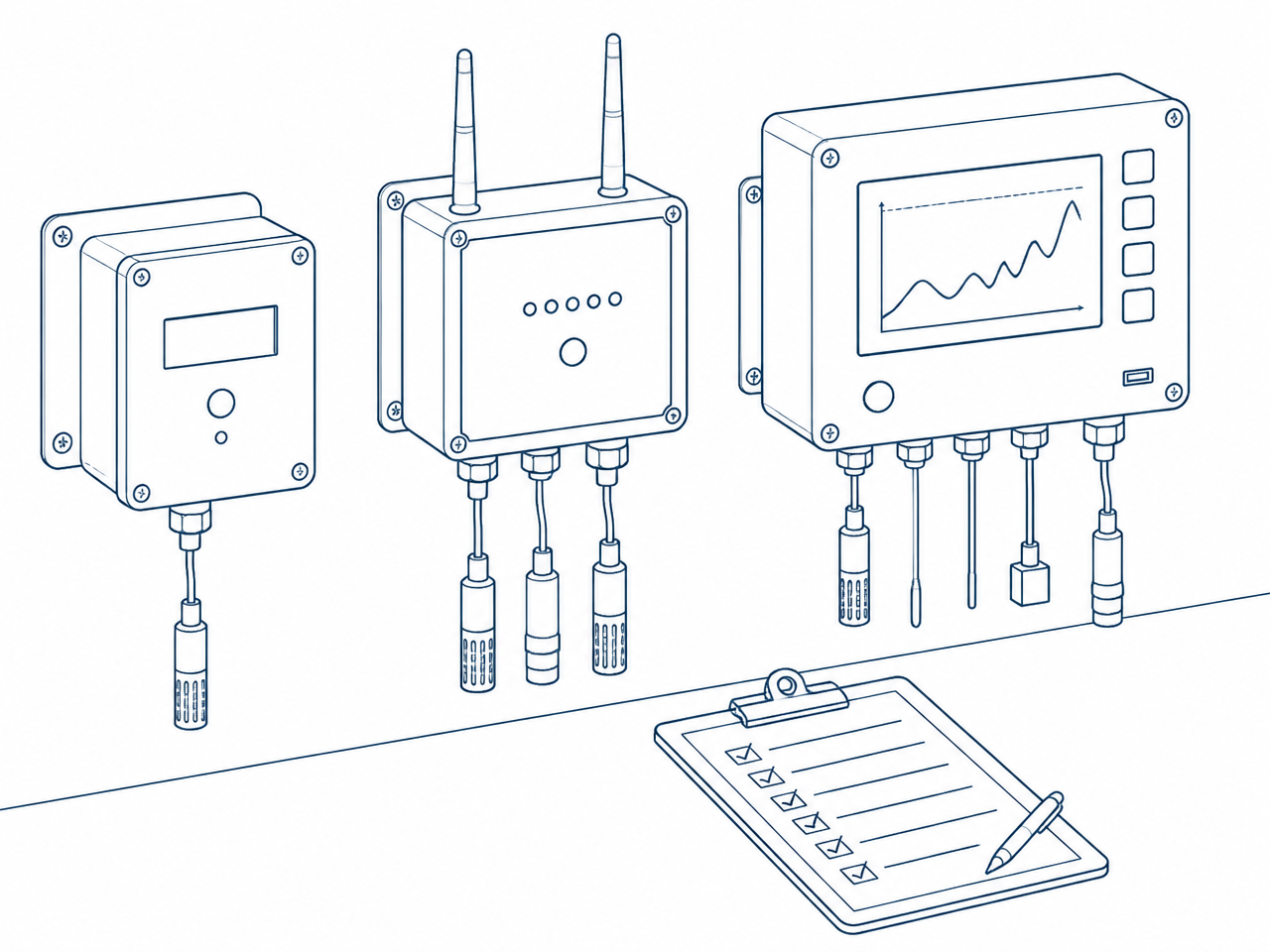
Elegir un sistema de supervisión para un entorno de laboratorio depende menos de las especificaciones de los sensores de lo que sugieren la mayoría de las comparativas de proveedores. Casi todos los sistemas serios miden la temperatura con precisión. Las diferencias que determinan si pierde un congelador lleno de muestras residen en la independencia, la escalada de alarmas, las pruebas y el soporte. Esta guía establece primero los criterios de evaluación y luego compara las categorías de sistemas disponibles en el mercado.
La respuesta breve
El mejor sistema es el que sigue midiendo cuando su edificio no lo hace, localiza a una persona específica a las 03:00 y puede demostrar después lo que ocurrió y quién actuó. La precisión del sensor es un requisito mínimo, no un factor diferenciador.
Siete criterios que de verdad diferencian a los sistemas
- Medición independiente. Sensores que pertenecen al sistema de supervisión, no al equipo. Un dispositivo que informa de su propia temperatura comunicará el valor que cree que tiene, incluso si su controlador ha fallado.
- Continuidad en caso de fallo. Puntos de medición con batería de respaldo, almacenamiento local de datos durante una interrupción de la red y un sistema de alarmas que no dependa de la misma fuente de alimentación ni de la misma LAN que los equipos.
- Escalada de alarmas, no notificación. Una cadena que avanza cuando la primera persona no confirma la recepción: segunda línea, tercera línea y una alternativa que no dependa de un solo teléfono. Pregunte qué ocurre si nadie responde.
- Calidad de las pruebas. Registro de auditoría a prueba de manipulaciones, marcas de tiempo del lado del servidor, cuentas únicas, retención de datos que se ajuste a su obligación legal más larga y exportaciones que un auditor pueda leer sin acceder al sistema en tiempo real.
- Soporte para la validación. Documentación IQ/OQ/PQ, certificados de calibración con trazabilidad y una ruta de control de cambios que no obligue a una revalidación completa por cada sensor añadido.
- Cobertura de parámetros. Más allá de la temperatura: CO₂ y O₂, humedad, presión diferencial, partículas, nivel de LN₂, estado de las puertas, flujo de aire, VOC, H₂O₂, luz y suministro eléctrico. Los sistemas que solo cubren la temperatura le obligarán a usar un segundo sistema más adelante.
- Quién se responsabiliza de la respuesta. El software por sí solo le devuelve el problema a usted. Un modelo de servicio pone a personas detrás de la cadena de alarmas, que es la diferencia que importa un domingo a las 03:00.
Comparación de las categorías de sistemas
Desplácese horizontalmente para comparar
Cómo realizar la evaluación
Empiece con una evaluación de riesgos en lugar de una solicitud de presupuestos. Elabore una lista de los equipos que conllevan riesgos, decida para cada dispositivo qué se debe medir y dónde debe ir la sonda, y solo entonces pida a los proveedores que respondan a esa lista. Un estudio de las instalaciones realizado con un consultor produce un conjunto de sensores; una lista de precios produce una conjetura.
Luego, antes de firmar, ponga a prueba tres cosas en la práctica: desconecte un sensor y observe qué sucede, corte el suministro eléctrico a un punto de medición y deje que una alarma se active por la noche sin confirmación para ver hasta dónde llega realmente la cadena.
Dónde encaja XiltriX
XiltriX se sitúa en las dos últimas filas de la tabla. La medición es independiente y cubre toda la gama de parámetros, cada estación de supervisión mantiene su propia fuente de alimentación de respaldo y el modelo de escalada sigue contactando a su propio personal de guardia en lugar de terminar automáticamente en un callejón sin salida, y nuestro equipo está disponible 24/7 para problemas técnicos con la propia supervisión. No somos la forma más barata de registrar una temperatura. Somos la opción adecuada cuando el material del congelador no se puede reemplazar.
Preguntas frecuentes
¿Es la supervisión inalámbrica lo suficientemente fiable para un laboratorio hospitalario?
Para muchas aplicaciones, sí, siempre que el sistema almacene los datos localmente, informe del estado de su propia conexión y batería, y no trate una lectura omitida como una lectura normal. Para el almacenamiento crítico, una estructura principal cableada o híbrida sigue siendo la base más segura.
¿Sigo necesitando un sistema si mis congeladores tienen alarmas incorporadas?
Sí. Una alarma incorporada no es independiente del dispositivo que vigila, suele ser solo local y no produce un registro que se pueda entregar a un inspector.
¿Qué exige realmente la normativa?
Dependiendo de su disciplina: ISO 15189, ISO/IEC 17025, anexo 1 y 11 de GMP de la UE, 21 CFR Parte 11 y la normativa sobre tejidos o sangre. Todas convergen en las mismas exigencias: medición continua con instrumentos calibrados, sistema de alarmas con respuesta documentada y un registro conservado y defendible.
¿Cuánto tiempo dura la implementación?
Una instalación en una sola sala puede estar operativa en cuestión de días. Un programa para todo un hospital con documentación de validación suele medirse en meses, y el plazo depende del estudio de las instalaciones y de la cualificación, no del hardware.