
Upgrading the ETZ IVF laboratory
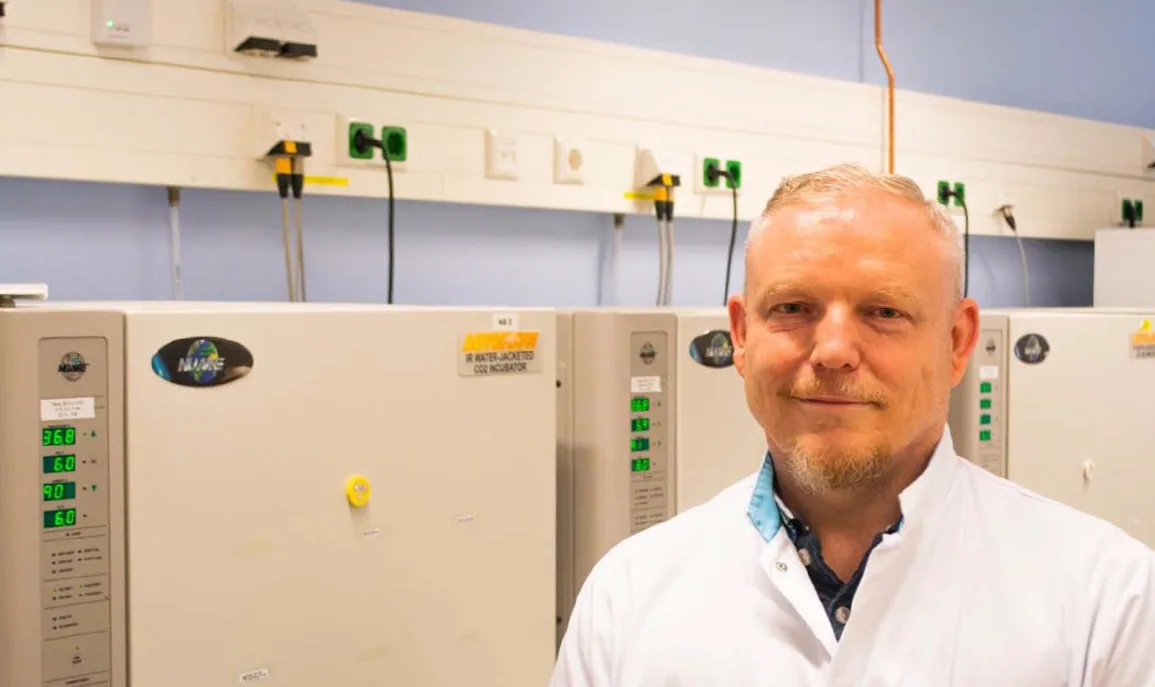
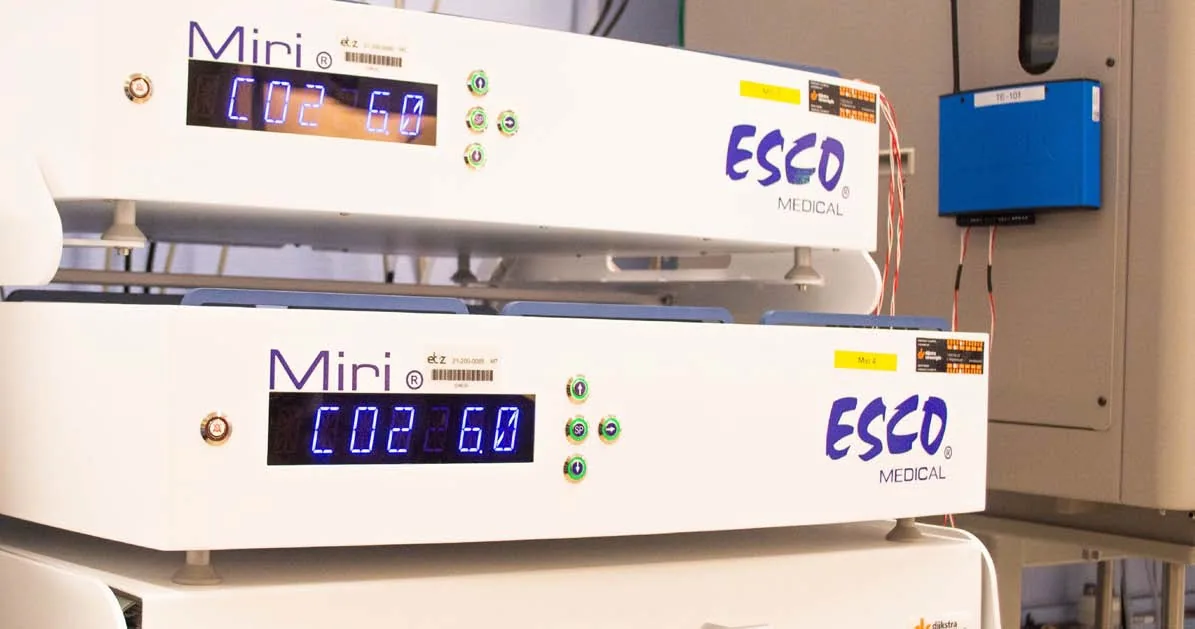
In 2022 the IVF laboratory of ETZ Hospital in Tilburg replaced its large volume low Oxygen box type CO₂ incubators for Esco Miri benchtop incubators. This replacement was accompanied by an overhaul of the XiltriX monitoring system that was already in use for almost two decades. Together with Dr Dimitri Consten we looked back to changes in the labs, equipment and processes over the last 20 years and forward to what’s next in IVF quality assurance development.
The Story of ETZ IVF Tilburg
The roots of the ETZ hospital date back as far as the Second World War where the number of patients increased and a new hospital had to be erected. The Centre of Fertility Medicine was formed in 1984 as the result of a collaboration between the Microbiology Lab and the Fertility and Obstetrics Department of the Sint Elisabeth Hospital and the Maria Hospital in Tilburg. In the 30 years following that collaboration the centre grew rapidly offering a full pallet of fertility treatments and investing in innovative new treatments and equipment for its patients.
*Sources: https://docplayer.nl/5789761-Jaarverslag-30-jaar-ivf-in-tilburg-centrumvoortplantingsgeneeskunde-brabant-centrumvoortplantingsgeneeskunde-brabant-centrumcentrum.html, https://infocvb.nl/missie-en-visie/
Dr Dimitri Consten has been part of the journey of the Fertility Centre since 2004. With his background in Developmental Biology, he has been able to lay a stable foundation for the department. Dr Consten has a special interest in quality and has been a auditor for the CCKL and RvA quality Organisation for many years. By utilising this experience there has been a never-ending drive to improve quality control in the lab trying to provide the best possible care to all patients.
Stages of the Implementation Process
The first stage in the process of replacing the incubators and XiltriX was performing a risk assessment of the proposed changes. Going from a water jacketed incubator to a benchtop incubators is very big change. It involves a lot of technical and process changes which need to be validated. Also, the XiltriX server was moved from an on premise server to a virtual environment. This meant reimplementation of the software in a new security infrastructure together with the IT department. The risk assessment was used to draft an implementation plan which needed to allow reimplementation of both the equipment and XiltriX monitoring solution in a controlled fashion in a working IVF laboratory environment. Dr Consten commented: “We have**been working with XiltriX and XiltriX International for the last 20 years. The combined experience and IVF knowledge of the XiltriX team, working with all stakeholders, has been instrumental in making this migration a success.”
Working with water jacketed box type incubators has a completely different risk profile compared to direct-heat benchtop incubators. The monitoring of box type incubators allows for measuring all parameters in a relatively big space (50-200 litres). Having a large access port, temperature, CO₂ and O₂ can be both independently measured and (in some cases) display values of the incubators can also be monitored by XiltriX. This gives a real-time picture of the growing conditions inside an incubator. Furthermore, the water jacket surrounding the incubation chamber keeps the embryos warm in case of long term power failure and allows for more reaction time of the user to prevent damage to the embryos. The downside of these types of incubators is the disturbance of all embryos every time the door is opened. This disturbance goes against the drive to maintain an “Undisturbed Embryo Culture” mimicking the homeostasis in the women’s body. Mr Han Weerdesteyn, CCO of XiltriX International said: “Many IVF labs are struggling with the migration from box type to benchtop incubators. They do not always realize the risk mitigation consequences of this move. XiltriX is able to provide guidance on how to successfully perform this migration and to mitigate the
risks involved.”
Benchtop incubators on the other hand, offer a benefit against more traditional box type incubators. Embryos do not get disturbed by chamber doors being opened for other embryos and chamber volumes allow for a lower CO₂ and N₂ gas consumption. The small volume, individually heated and controlled, chambers give rise to a higher risk profile in case of power or electronic failure though. Direct-heat devices have a limited heat retaining capacity and will cool down much more rapidly compared to water jacketed box type incubators. In order to mitigate this risk, a real-time monitoring system is imperative for retaining process control and to allow the user time to respond to an impending calamity before damage to the embryos occur.
Dr Consten shared his experience: “In the new benchtop incubators we only have 30 minutes or less to get to the lab before embryos incur viability damage. Having XiltriX, which provides measurement updates multiple times per minute, allows for a rapid response in case of any issue. Getting the correct alarm on time allows me to get to the lab to prevent damage.”
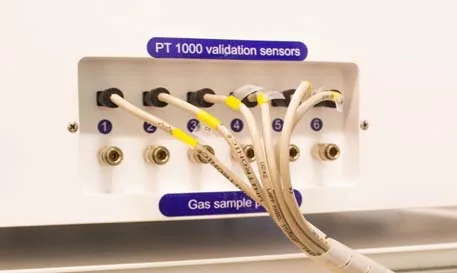
In order to mitigate the risk of the individually heated chambers, it is imperative to monitor each chamber independently. The Miri benchtop incubator has 6 built-in PT1000 temperature sensors to which the XiltriX monitoring system can be connected that allow for real-time temperature monitoring. On top of that all deviations in gasses or other issues need to be picked up too. The Miri incubator has a built-in alarm contact which is also connected to XiltriX to propagate any remaining issues. This setup mitigates the risks defined in the risk assessment done prior to this project. Dr Consten commented: “When switching to new technologies, one has to build up confidence. My experience as a CCKL and RvA auditor helps me to determine where risk mitigation is needed. The current integration of the new benchtop incubator monitoring system gives me confidence I will be notified of any issue in time to respond.”

Why ETZ IVF chose XiltriX
XiltriX has been the centralised monitoring and alarm system in the ETZ IVF lab for the last two decades. It has already proven its value and stability to the lab on many occasions. The project in the ETZ IVF lab was challenging both on a level of integration, as well as working together with a group of stakeholders in a functional laboratory environment. Dr Consten noted: “In a project like this, companies need to work together in order to achieve the best level of integration. XiltriX has shown that it can work with all stakeholders effectively, not limited to our own colleagues, but also suppliers of equipment.”
How the ETZ IVF uses XiltriX
The ETZ IVF lab uses XiltriX for more than the incubators alone. The lab has a fully functional cryogenic facility in which it stores both liquid filled dewars as well as automatically filled cryogenic storage vessels outfitted with a CryoFill controller, supplied by Cryo Products, digitally integrated with XiltriX. This allows for insight into LN₂ safety, filling and consumption. All other freezers, fridges and room conditions are measured by XiltriX to provide data and alarms in case of deviations. The lab even uses a wireless surface temperature sensor connected to XiltriX to optimise the setting of its heated surfaces and perform long term stability measurements. Mr Han Weerdesteyn commented: “Many people do not realise that a lab quality management system is only as strong as its weakest link. XiltriX helps labs to determine blind spots in the Quality Management and fix them with the proper monitoring solutions.”

The Results and what is next
Having finished the integration of the new Miri benchtop incubators, the lab has used the measurements of XiltriX to optimise the setup of the devices. The wireless surface measurement sensor was used to do internal measurements of chamber temperatures to perform in situ temperature validation. The setup results in a multi-tier process monitoring system with multiple levels of cascading alarms. Dr Consten commented: “Quality thinking in the Netherlands has started to materialize 3 decades ago and is anchored in legislation and accreditations.”
Aside from all the directly monitored sensors, there is always the question, what’s next? XiltriX has already built an API that can be used for exchanging data with third party systems. One of the existing integrations is with eFertility. The EMR and witness systems of this provider are very commonly used in the Benelux area. The integration allows for automatic reporting without the need of manual intervention. Dr Consten noted: “By allowing for data integration with third party systems, we can improve our ease of use and reporting. I am looking forward to working with XiltriX in building the best possible integration.”
Would you also like to have support in setting up an IVF or other type of laboratory, or upgrading your cryogenic repository? Please contact XiltriX at sales@xiltrix.com, or visit www.xiltrix.com.